
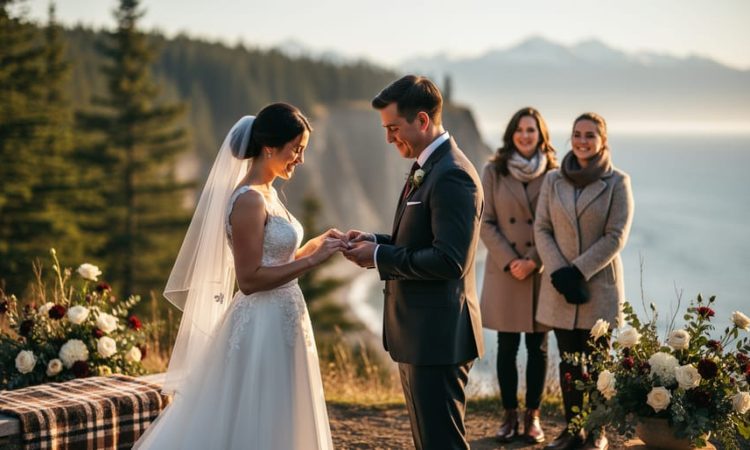
Canadian weddings blend European heritage, Indigenous customs, and multicultural influences into celebrations that are distinctly their own. From the intimate tradition of tying the knot with a fisherman’s bend in coastal communities to the spirited log-sawing challenges that test newlyweds’ teamwork, these seven traditions reflect Canada’s vast geography and cultural tapestry. Whether you’re planning a celebration in the Rockies, on the East Coast, or opting for one of many stunning destination wedding locations understanding these customs helps you create a ceremony that honors Canadian roots while telling your unique love story.
The beauty of Canadian wedding traditions lies in their storytelling potential. Each ritual carries meaning that translates gorgeously on film, capturing not just what happened, but why it mattered. These aren’t dusty customs borrowed from somewhere else. They’re living practices shaped by the country’s French, British, Indigenous, and immigrant communities, evolving with each generation while maintaining their emotional core. As couples increasingly seek authentic moments over cookie-cutter ceremonies, these traditions offer something rare: cultural depth that feels personal, not performed.
How We Chose These Canadian Wedding Traditions
Canada’s wedding landscape is beautifully complex, shaped by Indigenous roots, French and British colonial influence, and waves of immigration that brought traditions from every corner of the globe. Choosing just seven traditions meant looking beyond the ordinary and finding moments that truly capture what makes celebrating love here different.
We focused on four key factors. First, cultural significance: each tradition needed authentic roots in Canadian communities, whether Indigenous, regional, or brought by immigrant families who made this country home. Second, geographic representation mattered. Canada spans six time zones and countless cultures, so we wanted traditions from the Maritimes to the West Coast, from Quebec’s distinct French heritage to the prairies and the North.
Third, we considered visual storytelling potential. As a wedding filmmaker, I know certain moments translate beautifully to screen: the raw joy of community celebration, hands working together, the quiet intimacy of ceremony. Each tradition here offers something dynamic to capture. Finally, these traditions create genuine connection. They’re not performed for show but rooted in meaning, bringing families together and honoring heritage in ways that resonate emotionally, both in the moment and when couples watch their film years later.
1. The Inuit Blanket Toss Celebration
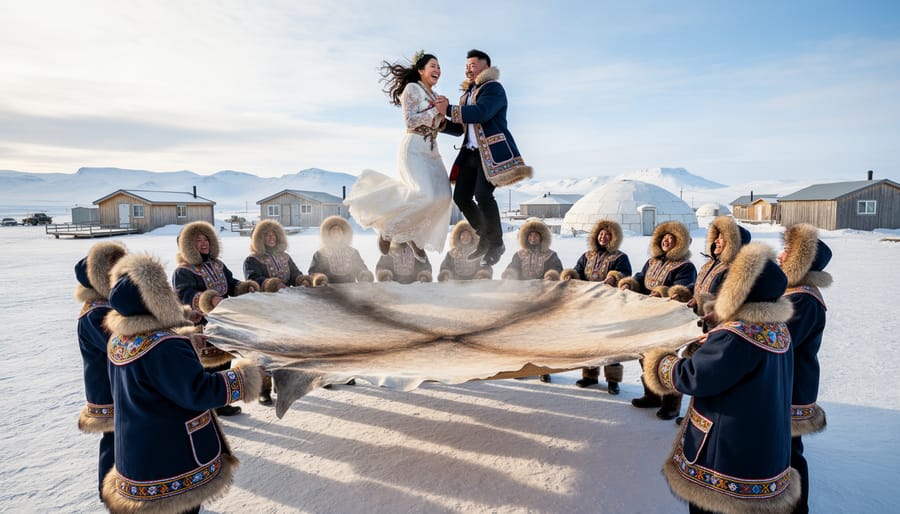
The blanket toss, known as Nalukataq in Inuktitut, brings explosive joy to weddings in Canada’s northern communities. Picture this: community members gather around the edges of a large sealskin or canvas blanket, gripping it tightly while the bride and groom stand at its center. With coordinated effort, they launch the couple skyward, sometimes twenty feet high, while everyone cheers and celebrates below.
This tradition originated as a hunting practice among Inuit communities, where a spotter would be tossed high to scan the horizon for whales or caribou. Over time, it evolved into a celebration reserved for special occasions: successful hunts, community gatherings, and weddings. The symbolism runs deep. Each toss represents the community literally lifting the couple up, demonstrating their support and commitment to the marriage. It’s a physical manifestation of “we’ve got you.”
Modern couples who incorporate this tradition typically work closely with Inuit elders to ensure respectful implementation. You’ll find it most commonly in Nunavut, Northwest Territories, and northern Quebec weddings, though some couples with Inuit heritage include it at southern venues when community members can participate. The blanket itself matters, traditional sealskin carries cultural weight, though sturdy canvas works when sealskin isn’t available.
From a videography perspective, this creates breathtaking footage. The anticipation on faces, the split-second of weightlessness, the pure laughter, these moments capture raw emotion you can’t choreograph. If you’re planning to include cultural traditions, check your wedding budget guide early, as bringing community members to your venue or hosting in traditional territories requires thoughtful financial planning.
2. French-Canadian Reveillon Reception
The Reveillon reception transforms a Quebec wedding into an all-night celebration that captures the heart of French-Canadian hospitality. This beloved tradition extends the wedding feast well past midnight, creating an atmosphere where time seems to stand still and genuine connection takes center stage.
Picture tables laden with tourtière, that savory meat pie that’s been passed down through generations, alongside steaming bowls of pea soup, sugar pie, and stacks of cretons on fresh bread. But Reveillon isn’t just about the food. It’s about the moment when formal reception transitions into something more intimate, when jackets come off, fiddles come out, and guests settle in for hours of storytelling and folk music.
The magic happens around 11 PM or midnight. The formal dinner service has concluded, but instead of winding down, a second wave of energy arrives. Musicians strike up traditional Quebec tunes, older relatives share stories in rapid-fire French, and younger generations join in songs they’ve known since childhood. The dance floor becomes less choreographed, more spontaneous.
For videographers, this is where authentic emotion lives. You’ll capture grandmothers teaching grandchildren traditional steps, couples swaying together in candlelight as dawn approaches, and those quiet moments when two or three people harmonize an old ballad. The soft, golden light of early morning creates a dreamlike quality that polished receptions rarely achieve.
Modern couples often adapt Reveillon by starting earlier, perhaps at 10 PM, to accommodate guests who can’t stay until sunrise. Even a shortened version preserves the essence: that distinctly French-Canadian spirit of celebration that refuses to rush joy.
3. The Log-Sawing Ceremony
The log-sawing ceremony brings a rustic, participatory element to Canadian weddings that guests absolutely love. Picture this: immediately after exchanging vows, the newlyweds grab opposite ends of a two-person crosscut saw and work together to cut through a ceremonial log. It sounds quirky, but the symbolism runs deep.
This tradition represents the couple’s first physical challenge as husband and wife. They must coordinate their movements, find a rhythm together, and persist through something that requires genuine teamwork. The log becomes a metaphor for any obstacle they’ll face in marriage, overcome it together, and nothing feels impossible.
You’ll find this ceremony most commonly in British Columbia and across the prairie provinces, where forestry heritage runs strong. Many couples choose logs with symbolic meaning: wood from family property, a tree species native to where they met, or timber with beautiful grain that they later display in their home as a wedding keepsake.
What makes this tradition incredibly cinematic is the raw emotion it captures. The bride’s laughter as sawdust flies, the groom’s concentration as he adjusts his technique, guests cheering with each stroke, these candid moments showcase personality in ways posed portraits never could. Some couples breeze through in under two minutes while others struggle comically for five, creating genuine entertainment that feels authentic rather than staged.
Modern variations include decorating the log with flowers, having family members paint it beforehand with blessings, or timing the sawing as a friendly competition. The rough-hewn simplicity of this tradition creates warmth and approachability that translates beautifully on film.
4. Maritime Kitchen Party Reception
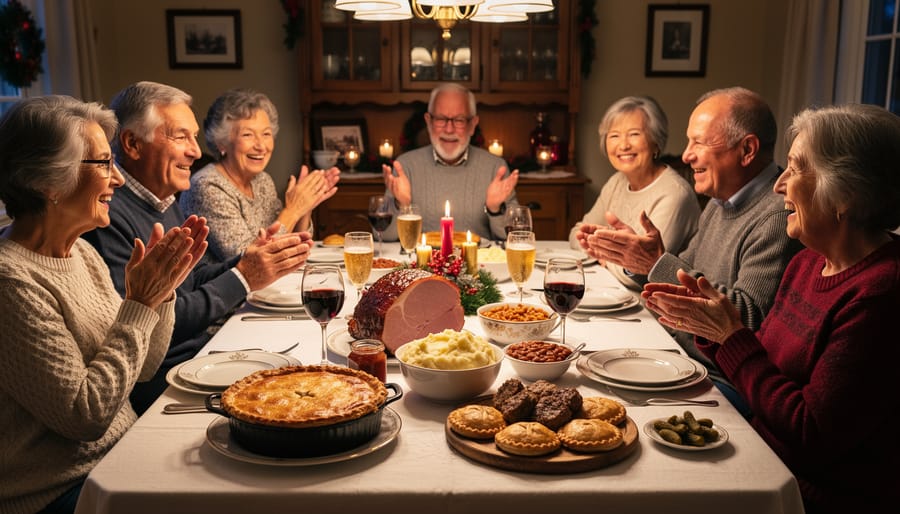
Picture a reception where formality gives way to genuine connection, that’s the magic of a Maritime Kitchen Party. Born in the fishing villages and rural communities of Nova Scotia, New Brunswick, Prince Edward Island, and Newfoundland, this tradition transforms wedding celebrations into intimate gatherings that feel like visiting your favorite relatives.
Unlike conventional receptions with assigned seating and structured programs, a Kitchen Party unfolds organically. Guests crowd into a casual space, sometimes literally a kitchen, other times a barn or community hall, where fiddles, guitars, and accordions emerge from cases. Someone starts a reel, feet begin tapping, and before long, the whole room pulses with traditional step-dancing and Celtic-inspired folk music.
The beauty lies in participation rather than performance. Uncles swap stories between songs. Grandmothers teach young cousins dance steps passed down through generations. Someone inevitably launches into a sea shanty, and the room joins in. There’s no MC announcing each moment, everything happens naturally, spontaneously, joyfully.
For videography, Kitchen Parties offer pure gold. The unscripted laughter, impromptu musical collaborations, and genuine emotion create documentary-style footage you simply cannot stage. The warm lighting, close quarters, and flowing movement between conversations and dancing produce cinematic moments that feel alive and real.
Many modern Canadian couples recreate this atmosphere by hosting a Kitchen Party as their rehearsal dinner or late-night after-party. Even when incorporated into larger venues, the spirit remains: turn down the formality, turn up the authenticity, and let your community celebrate in the honest, heartfelt way Maritimers have perfected over centuries.
5. The Money Dance with a Canadian Twist
The money dance, known in some circles as the dollar dance, has evolved beautifully in Canadian weddings to reflect contemporary values and creative spirits. Rather than the traditional approach of guests paying for a brief dance with the newlyweds, many Canadian couples now transform this moment into something more meaningful and personally significant.
A popular Canadian adaptation involves donating the collected funds to a cause close to the couple’s hearts. Guests still pin bills to the couple during the dance, but the money goes directly to environmental charities, animal rescues, or community organizations that matter to them. Some couples match the donations, doubling the impact while creating a touching moment that videographers love to capture as guests share why they support the cause.
Other couples infuse personality through creative presentation. Instead of traditional pinning, they might use decorative money trees, custom envelopes with handwritten notes from guests, or even include cultural elements from their backgrounds alongside the dance. These personal touches work especially well at breathtaking wedding locations where the atmosphere already feels unique and special.
The key shift is intentionality. Canadian couples approach the money dance as an opportunity for connection rather than simply collecting gifts, whether that means dedicating time to chat with each guest, incorporating multiple family members into the tradition, or reimagining it entirely to align with their wedding vision.
6. Indigenous Smudging Ceremony
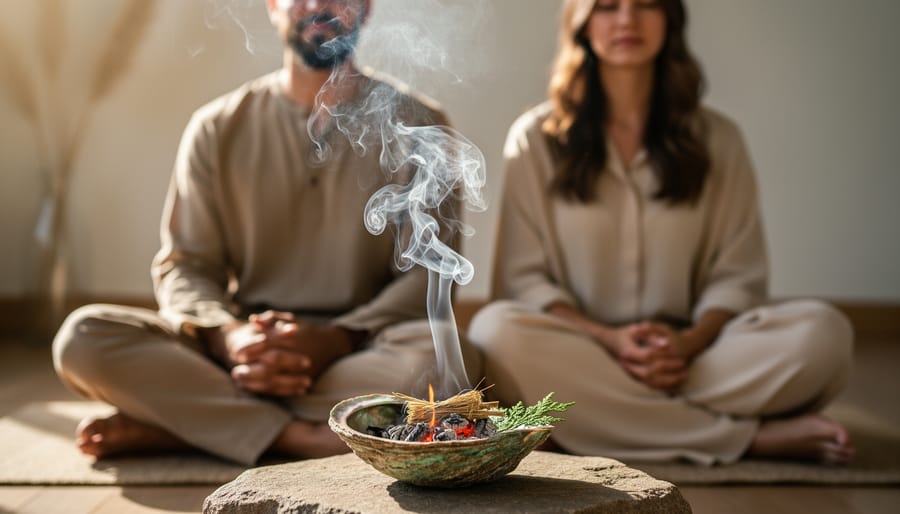
The smudging ceremony represents one of the most spiritually profound traditions in Canadian weddings, particularly for couples with Indigenous heritage. This sacred practice involves burning sage, sweetgrass, cedar, or tobacco to cleanse the space and participants of negative energy while inviting positive spirits to bless the union.
During the ceremony, an Elder or knowledge keeper typically guides the ritual, using an abalone shell or clay vessel to hold the burning medicines. The smoke is gently fanned using an eagle feather or hand, and participants draw it toward themselves in a washing motion over their head, heart, and body. The practice acknowledges the four directions, the Creator, and the ancestors who came before.
What makes this tradition particularly meaningful is its timing. Some couples choose to smudge before the ceremony to calm nerves and center themselves spiritually. Others incorporate it during the ceremony itself as a blessing, or use it to open the reception space, creating a sacred atmosphere for celebration.
The key to honoring this tradition lies in approaching it with genuine respect and understanding. Couples should work with Indigenous Elders or cultural advisors from their own community or nation to ensure proper protocol is followed. Each Indigenous nation has distinct practices, and what’s appropriate in one tradition may differ in another. Never attempt to self-direct a smudging ceremony or treat it as decorative symbolism.
When filmed thoughtfully, the smudging ceremony creates deeply moving footage. The rising smoke, the Elder’s careful movements, and the couple’s reverent participation tell a story of spiritual connection and cultural continuity. These moments capture something beyond celebration, they document the sacred bonds between past, present, and future generations.
7. The Multicultural Fusion Celebration
Canada’s cultural mosaic creates some of the world’s most beautiful wedding celebrations, where couples weave together traditions from multiple heritages into ceremonies that tell their unique love stories. You might witness a morning Chinese tea ceremony where the couple honors elders with symbolic sips, followed by an afternoon Ukrainian bread-and-salt blessing that welcomes abundance, all before an evening reception featuring Bollywood dancing alongside Celtic folk songs.
These fusion celebrations aren’t about checking cultural boxes. They’re deeply personal expressions of identity that reflect how Canadian families have blended over generations. A bride might wear a white gown for the ceremony, change into a vibrant red lengha for the Indian pheras, then slip into an embroidered Ukrainian vyshyvanka for the reception entrance. Each outfit change tells part of her story, creating visual richness that makes wedding films incredibly dynamic and emotionally layered.
The logistics require thoughtful coordination. Some couples create distinct ceremony segments with natural transitions, while others interweave elements throughout. A Jewish chuppah might incorporate Indigenous cedar boughs in its construction, or a Filipino money dance could follow immediately after a Greek plate-smashing celebration. The key is intentionality, each tradition should feel organic to your relationship, not performative.
These multicultural moments cost more to document well than a standard ceremony. Between outfit changes, multiple ritual setups, and extended timelines that sometimes rival destination wedding cost considerations, you need a videographer who understands cultural nuances and can anticipate meaningful moments across different traditions. The result, though, is a wedding film that captures the full complexity of your heritage and the beautiful merging of families that makes Canadian celebrations so distinctly moving.
Why These Traditions Matter for Your Wedding Film
These unique Canadian traditions aren’t just beautiful moments, they’re the heart of your wedding story. When we capture an Inuit blanket toss or a late-night Reveillon feast, we’re filming more than choreographed events. We’re documenting authentic connections between families, the laughter that erupts during a log-sawing ceremony, and the quiet reverence of a smudging ritual. These traditions create layers of meaning in your wedding film that generic timelines simply can’t match.
Cultural ceremonies also give us cinematic gold: the dramatic lift of a blanket toss, the warm glow of kitchen party fiddles, the intimate close-ups during a tea ceremony. Whether you’re incorporating traditions from your heritage or you plan a wedding getaway that honors multiple cultures, these moments become the emotional anchors that make viewers feel something years later.
- Communicate with your videographer beforehand about which traditions matter most to you
- Allow extra time in your schedule so these moments aren’t rushed
- Brief your officiant or cultural guide on camera-friendly positioning
- Embrace imperfection, the genuine reactions create the most powerful footage
When your grandchildren watch your wedding film decades from now, they’ll see more than a celebration. They’ll witness their family’s heritage alive and honored, preserved in cinematic detail for generations who might otherwise never experience these traditions firsthand.
Frequently Asked Questions
Planning a wedding that honors your heritage while staying true to your vision can feel overwhelming, especially when you’re blending traditions from different backgrounds or regions. These questions come up time and again with couples who want their celebration to feel both authentic and personal.
Can we mix multiple cultural traditions in one wedding?
Absolutely. Canadian weddings often beautifully blend two or more traditions, reflecting our multicultural identity. The key is explaining each tradition’s significance to your guests and ensuring you approach borrowed traditions with respect and understanding.
How do we explain unfamiliar traditions to out-of-province guests?
Include a brief explanation in your ceremony program, have your officiant introduce the tradition before it happens, or post details on your wedding website. Guests appreciate understanding the “why” behind meaningful moments.
Do we need permission to incorporate Indigenous traditions?
Yes, always seek guidance from knowledge keepers or Elders from the specific Indigenous community whose traditions you wish to honor. This ensures respectful, appropriate incorporation and proper understanding of sacred practices.
How much time should we allocate for cultural traditions?
Most traditions take 5-15 minutes, though some like the Reveillon can extend your reception. Work with your videographer and coordinator to build adequate time into your timeline without feeling rushed.
Remember that your wedding traditions should feel right for you as a couple, not obligatory. If a particular custom doesn’t resonate with your values or story, it’s perfectly fine to skip it or adapt it in a way that feels more authentic. The most meaningful weddings happen when couples choose traditions that genuinely reflect who they are and where they come from, creating moments that feel natural rather than performed.
Your love story is uniquely yours, and the traditions you choose to weave into your celebration should reflect what truly matters to you both. Whether you’re drawn to the joyful energy of an Inuit blanket toss, the intimate warmth of a Maritime kitchen party, or a beautiful fusion of your family’s diverse heritage, these Canadian touches transform your wedding from a beautiful event into a deeply meaningful experience.
These aren’t just customs to check off a list. They’re moments that connect you to your roots, honor the generations before you, and create authentic emotion that shines through in every frame of your wedding film. When you incorporate traditions that resonate with your hearts, you’re giving me the gift of capturing real, unscripted joy, the kind of footage that becomes more precious with each passing year.
I’d love to hear about the traditions you’re planning and help you preserve these meaningful moments through cinematic storytelling that honors your heritage. Let’s create a wedding film as unique as your love story. Reach out to explore how we can capture your celebration in a way that feels authentically you.