
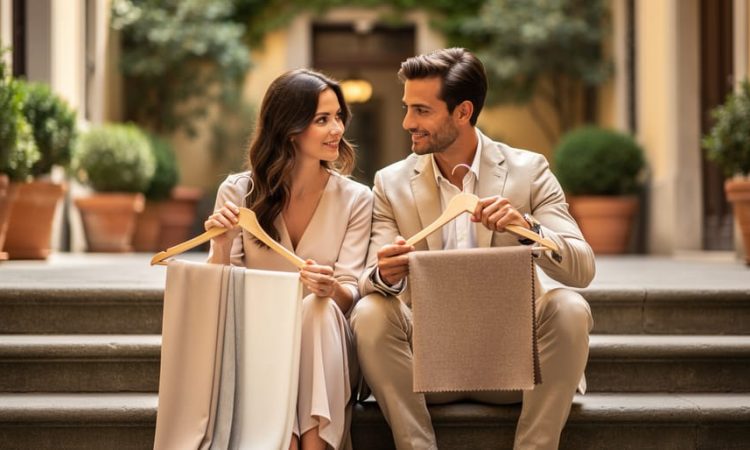
The best outfits for pictures are the ones that feel like you on your very best day: comfortable, coordinated without being matchy, and chosen with the light and location in mind. Plan on about a week to settle your looks, and start with one simple question. What do you want this session to feel like?
That feeling is the whole secret. Soft, flowing fabrics read dreamy and romantic on camera. Clean lines and rich tones feel modern and polished. When your outfits tell the same story as the setting, every frame looks intentional, almost like a still from a film.
It’s the same thinking behind great cinematic wedding filming, where colour, movement, and mood all work together to carry the story.
Below, you’ll find what to gather, what to avoid, and a simple step-by-step way to choose outfits you’ll love seeing for years to come.
What You’ll Need Before You Start Picking Outfits
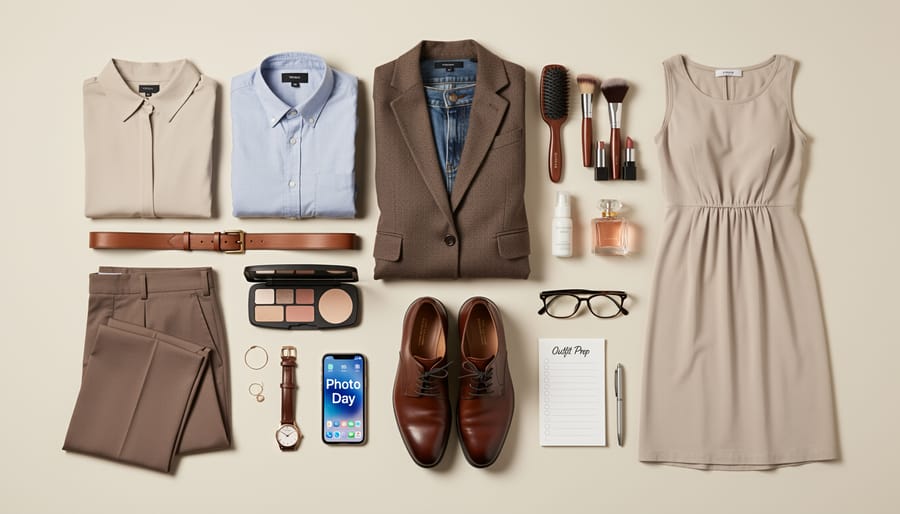
Before you pick a single outfit, it helps to gather a few simple things. Think of this as setting the stage, because what you wear is part of the story the camera tells. The right preparation makes choosing feel playful instead of stressful.
Here’s your starter checklist:
- A shortlist of three or four outfit options per person, so you have room to compare.
- A mood or colour inspiration board, whether it’s a Pinterest folder or a few saved screenshots.
- A quick note on your location and time of day, since golden hour light behaves very differently from a bright midday sky.
- A handheld steamer or lint roller to keep fabrics smooth and crumb-free.
- Comfortable shoes you can walk in, plus a backup pair for uneven ground.
- A small touch-up kit with blotting papers, a comb, safety pins, and lip colour.
Start with the inspiration board, because it gives everything else a direction. Look for colours and textures you keep returning to, like soft neutrals, rich jewel tones, or flowing fabrics that catch the breeze. You’ll start to see a feeling emerge, and that feeling is what guides your choices.
Then think about where you’ll be standing. A sunlit field, a city rooftop, and a cozy living room each call for different looks. Knowing the setting and the light early means you can choose pieces that belong there, and a film that feels natural, warm, and entirely you.
Before You Shop: Comfort, Fit, and Movement Checks
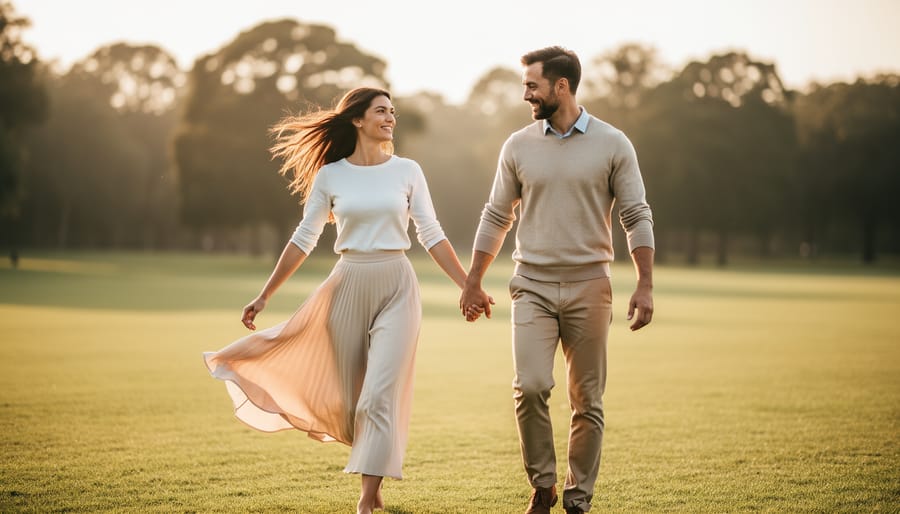
Here’s a little secret from behind the lens: the camera notices comfort long before it notices a label. An outfit that pinches at the waist, itches at the collar, or tugs across the shoulders shows up as a stiff smile and tense posture. Research on movement-related wear discomfort backs up what we see on shoots all the time: when clothing restricts you, you move differently. Think of these checks as gentle signals to pause and rethink, not reasons to worry.
Start with your footwear and hems. Heels sink into grass, slide on wet rock, and wobble on cobblestones, and a long hem can catch your ankle mid-twirl. Learning how footwear affects slip risk is a smart move if your session involves uneven ground, breezy cliffs, or a shoreline. A windy field also loves to play with flowing skirts and veils, so choose fabrics with a little weight, or plan to embrace the swirl.
Weather matters too. A chilly golden hour can leave you shivering, while a hot afternoon can leave you wilting. Tips for layering for winter comfort work beautifully for photo days, since a soft cardigan, tailored jacket, or cozy wrap adds dimension and keeps you warm between takes.
When you feel at ease, it shows in every glance and laugh.
Step by Step: Building Outfits That Photograph Beautifully
Start With the Feeling and the Setting
Begin by picturing the mood and the place, because your clothes should feel like they belong in the scene. A sunlit field asks for soft, breezy pieces, while a city rooftop can carry sharper lines and bolder tones. At home, cozy textures feel instantly romantic. If you’re dreaming of the water, our Sugar Beach planning tips show how the setting shapes what looks best on camera.
- Picture the mood and setting you want to be remembered in.
- Pick a colour palette that works for you and your partner.
- Choose flattering fits and textures you feel great in.
- Add movement with flowy fabrics or easy layers.
- Keep patterns and logos gentle so your faces stay the focus.
- Plan accessories, hair, and beauty touches that support the look.
- Try everything on together and move around, hugging, twirling, and laughing.
When your outfit matches your personality, it shines right through in the film.
Colours, Textures, and Coordinating as a Couple
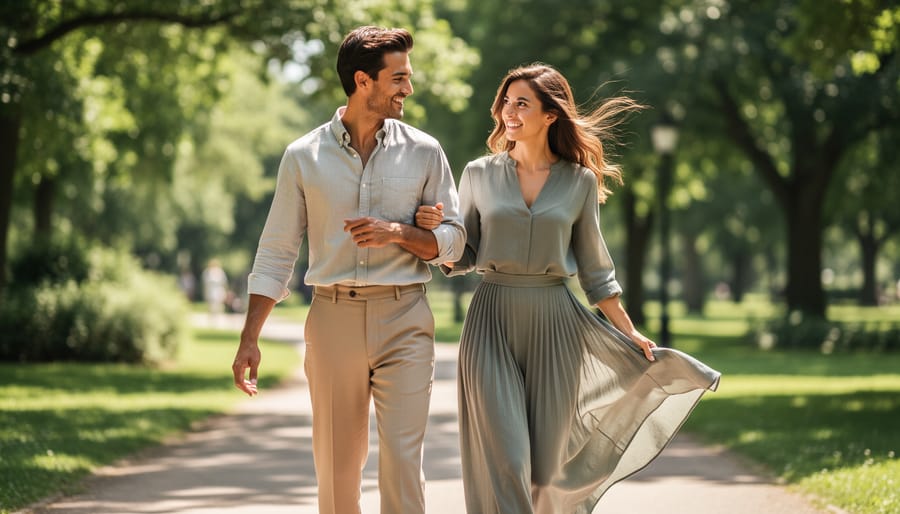
Think of your two outfits as a conversation, not a copy. You want them to sound like they belong together without saying the exact same thing.
Start with a shared palette of two or three colours, then let each of you wear a different shade within it. Soft neutrals like cream, warm taupe, and dusty rose flatter almost every skin tone. Deep jewel shades such as emerald, burgundy, and navy look rich and cinematic, especially in golden light. If you’re shooting in a green field, earthy tones and muted blush blend gently into the scenery. Against a city backdrop, richer colours help you stand out.
Coordinating doesn’t mean matching. If one of you wears a patterned piece, let the other choose a solid that pulls out one colour from it. That small echo ties everything together beautifully.
Be careful with stark white, neon, and busy, tiny patterns. They can glare or shimmer on camera. Instead, reach for textures that catch light softly: chiffon, silk, knit, linen, and lace. Layering a chunky cardigan over a silky slip gives you depth without any fuss. Texture adds warmth, and warmth is what makes a film feel like a memory.
Movement, Layers, and Beauty Details
Movement is where a photograph becomes a film. Fabrics that sway, like chiffon, silk, or a soft midi skirt, catch the breeze and ripple during a slow dance or a walk through tall grass. Test a few options by twirling once or twice. If the fabric flows instead of clinging, it’s earned its place on your shortlist.
Layers add dimension too. A tailored blazer, a cozy knit, or a light scarf gives you something to adjust, drape over a shoulder, or wrap around your partner. That gentle motion makes candid moments feel natural. Texture is having a moment right now, so think linen, knit, and brushed cotton alongside the classics.
Finish with beauty details that support your look instead of competing with it. Choose hair that holds up when you’re laughing or leaning in close, and makeup that looks like a polished version of you. Keep accessories simple: one standout piece, like delicate earrings or a favourite watch, is plenty. When every detail feels effortless, you’ll look relaxed, radiant, and completely yourself.
Quick Tries Before the Big Day: Checking Your Outfit and What Comes Next
A few days before your session, do a simple test run at home. Put on each outfit, prop up your phone, and record yourselves walking, hugging, twirling, and laughing together. Watching it back tells you so much. You’ll see whether a hem rides up, a collar gapes, or a fabric clings in all the wrong places. If you catch yourself tugging at something in the video, that’s your answer.
Next, step by a window and look at each piece in natural light. Colours that seem soft and rich indoors can turn flat, shiny, or even see-through in daylight, and a quick check now saves you from surprises later. Once you’ve chosen, steam or iron everything and hang it somewhere clean, ready to grab. Pack a backup top or dress, a spare pair of comfortable shoes, and your little touch-up kit so a spill or a gust of wind never throws you off.
Finally, share your plans. Send your photographer and videographer a few photos of your outfits, or even a screenshot of your colour palette. They can suggest the best spots and lighting for your looks, and everything will feel cohesive on screen, from the stills to the cinematic film. It’s a small step that makes the whole experience feel effortless.
Common Questions About Outfits for Pictures
Here are a few of the questions couples ask us most often, answered simply.
Should we match or just coordinate?
Coordinate. Pick a shared palette or a similar level of dressiness, and let each outfit keep its own personality. It looks more natural on camera and feels more like you.
What colours photograph best outdoors?
Soft, earthy tones like cream, sage, dusty rose, and warm neutrals tend to glow in natural light and blend beautifully with greenery. Deeper jewel tones work well too, especially in golden-hour light.
How many outfit changes are enough for an engagement session?
Two is a lovely sweet spot: one polished, one relaxed. It gives you variety without eating into the time you want to spend simply enjoying each other.
What should I wear if the weather is unpredictable?
Think layers you can add or remove, like a light jacket, a cozy wrap, or a scarf. They keep you comfortable and add lovely dimension to your look as you move.
Bold patterns can be gorgeous, as long as only one of you wears them and the rest of the look stays calm. And yes, footage can feel different from stills. Movement shows off flowing fabrics and tiny gestures, so a skirt that swirls or a jacket that catches the breeze often steals the show on film.
Wondering how your outfits fit into the bigger picture? It helps to choose your film style first, since that shapes the mood you’re dressing for. And if you’re planning your budget alongside your wardrobe, take a peek at typical wedding videography cost so every piece of the day feels thoughtfully planned.
At the end of the day, the best outfit is the one that lets you feel completely like yourself. When you’re comfortable, a little giddy, and wrapped up in the person beside you, the camera simply catches it. Choosing outfits for photos isn’t about perfection. It’s about picking pieces that move with you, glow in the light, and carry the story you want to look back on years from now.
So trust your instincts, take that test walk, and let your laughter do the rest. The fabric will sway, the colours will soften, and the real moments will take care of themselves.
When you’re ready to see how those moments can become a film you’ll treasure, I’d love to share Heather’s wedding videography packages with you. Your love story deserves to be seen, felt, and replayed for a lifetime.